2D Metaverse – Immersive Browser-Based Virtual World
Overview
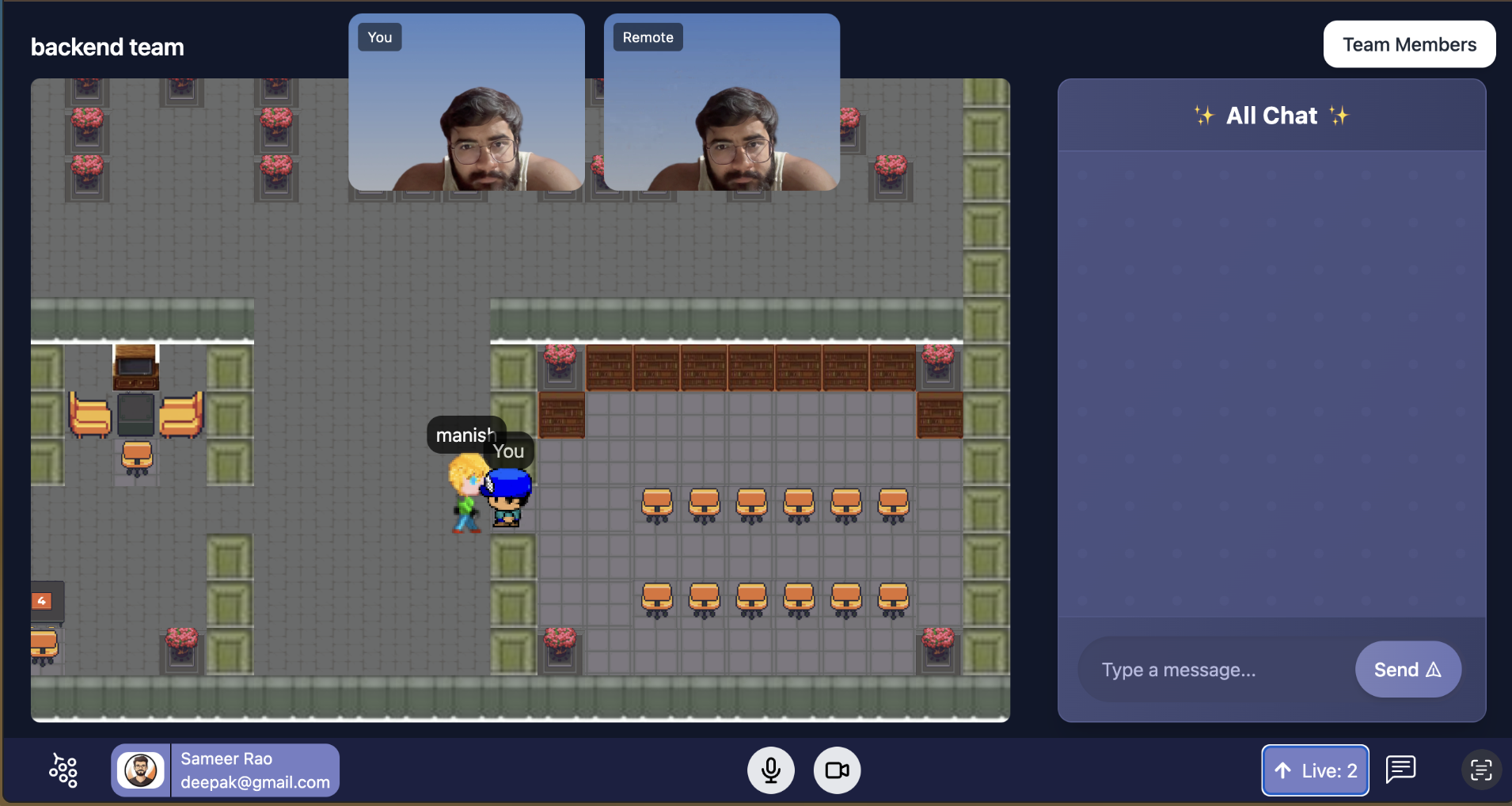
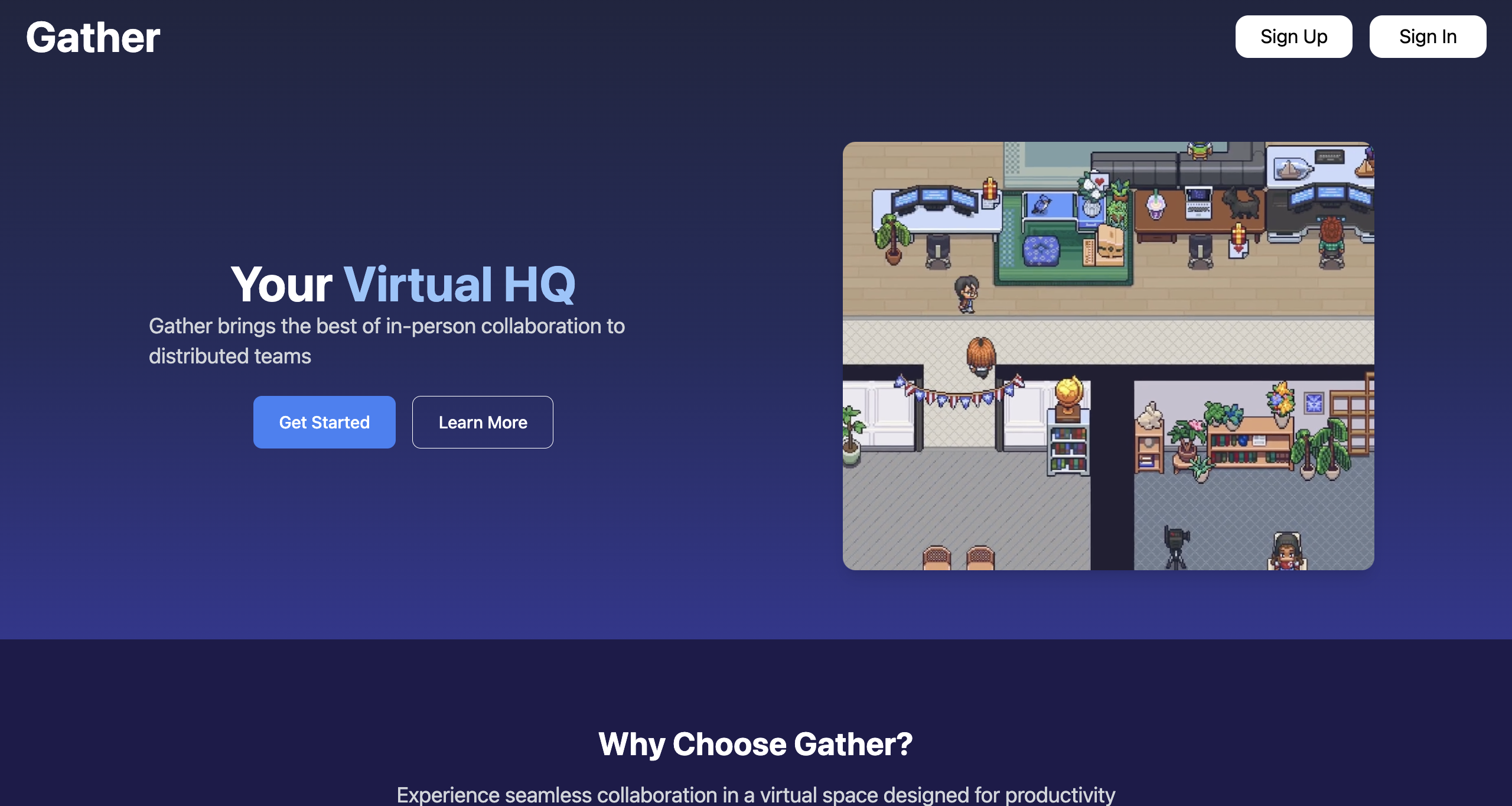
The 2D Metaverse is an immersive virtual environment accessible directly via web browsers. It blends real-time communication, avatar-driven exploration, and spatial collaboration into one seamless experience. Designed to feel like a "virtual office" or "hangout space," users can move around rooms, talk with others via video calls, and experience a persistent shared environment.
🛠 Technologies Used
- Frontend: React, Next.js, TailwindCSS, Framer Motion
- Backend: WebSocket, Prisma, PostgreSQL
- Dev Tools: VSCode, Figma, Chrome DevTools, GitHub
🚀 Live Demo
✨ Key Features
- 🧭 Real-time avatar-based navigation on a 2D/3D interactive map
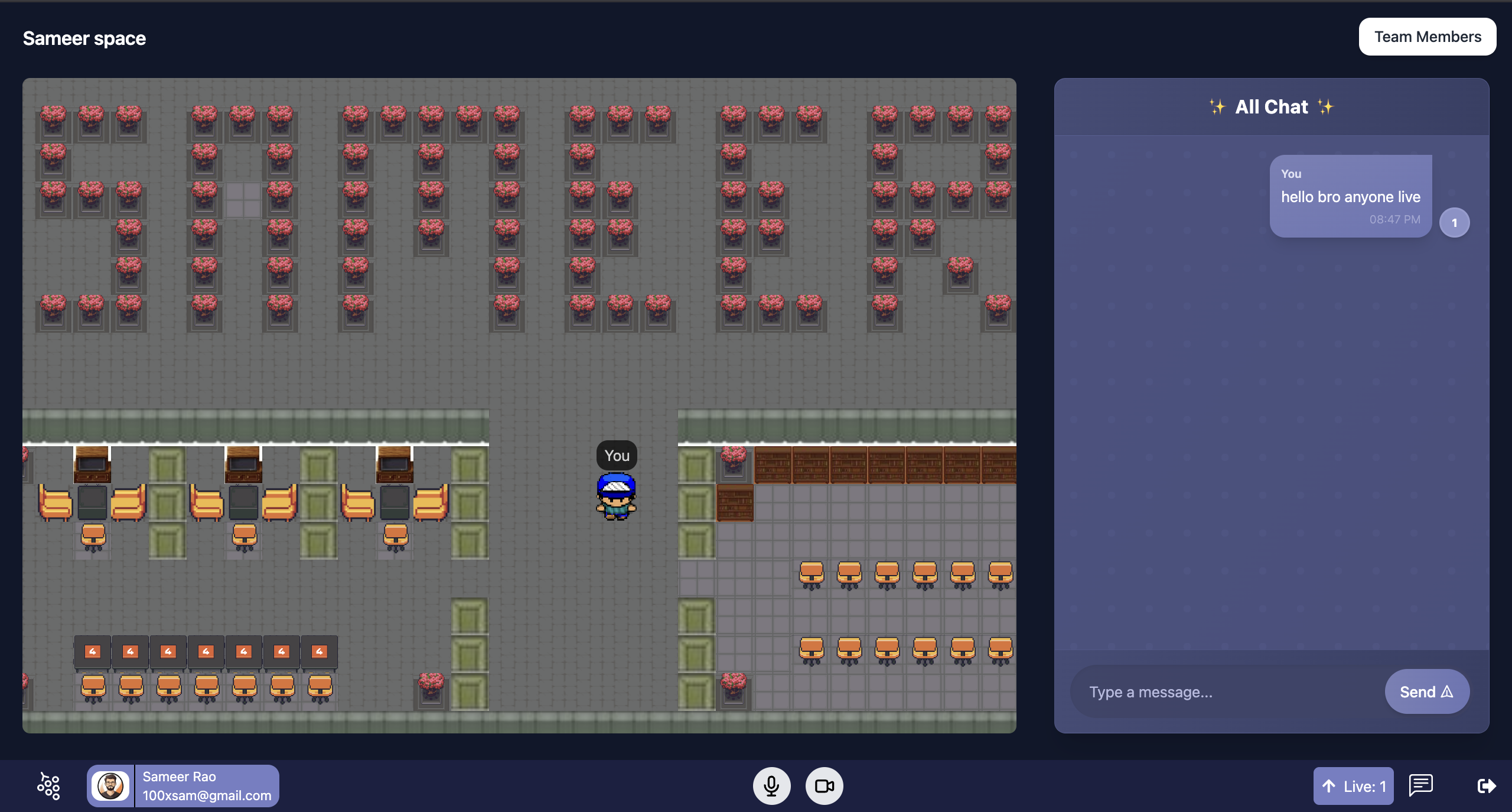
- 💬 Personalized virtual spaces with chat and proximity-based video calls
- 🎥 One-on-one and group video calls between users in real-time
- 🏗️ Modular scene architecture that supports dynamic content injection
- 🕹️ Realtime state tracking for user position and interaction
- 🔁 Reusable component design for efficient expansion and scene creation
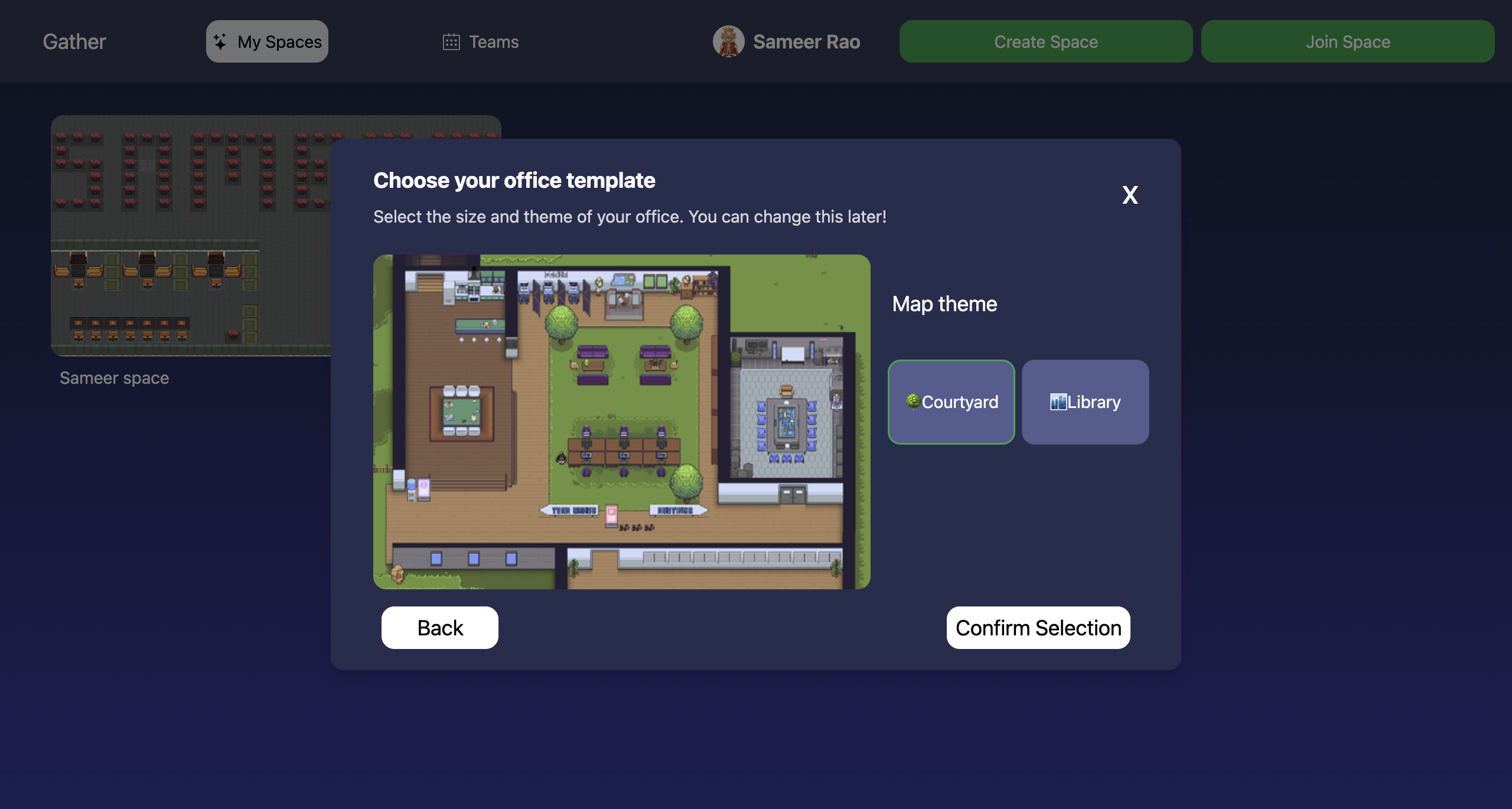
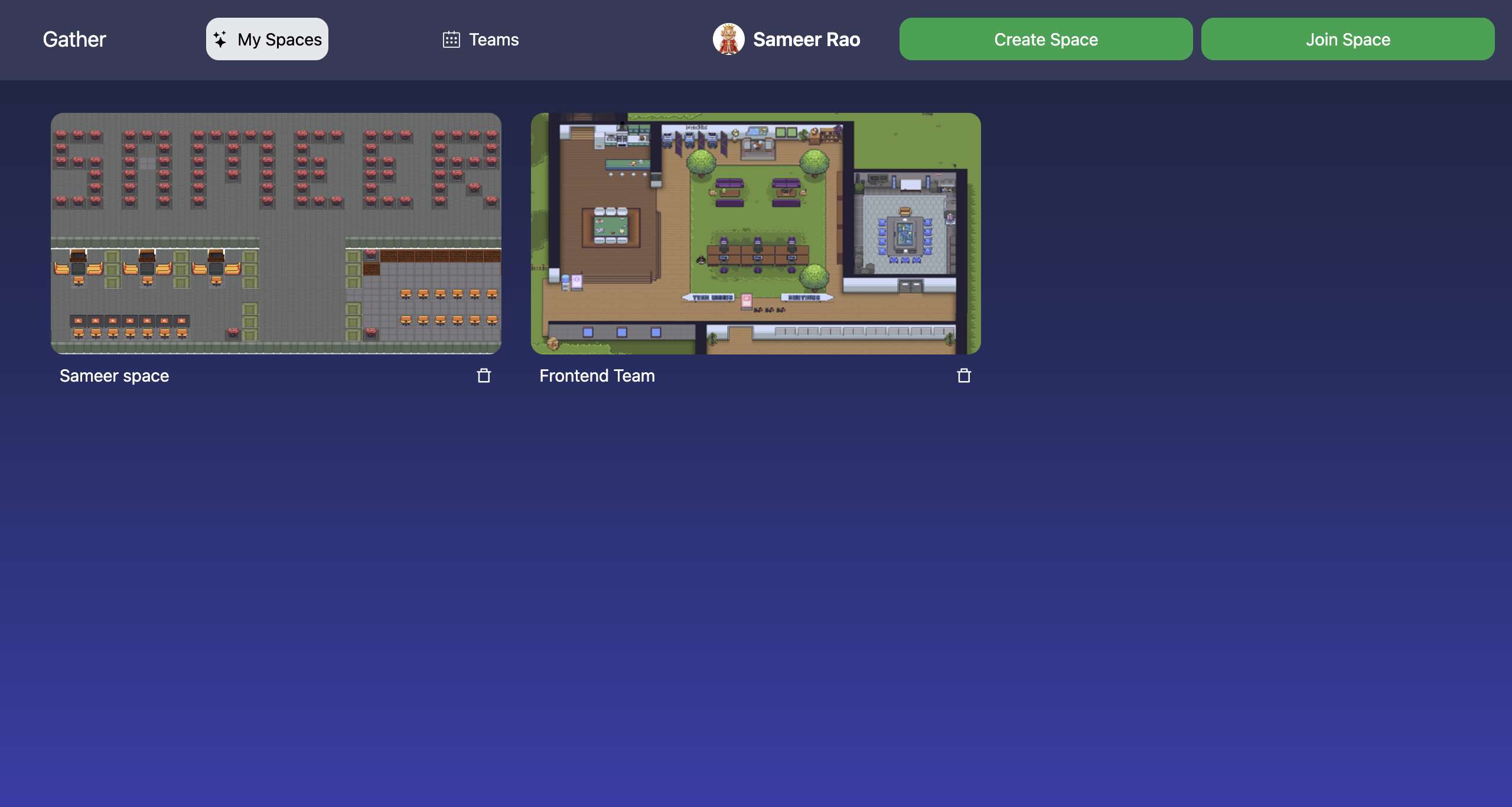
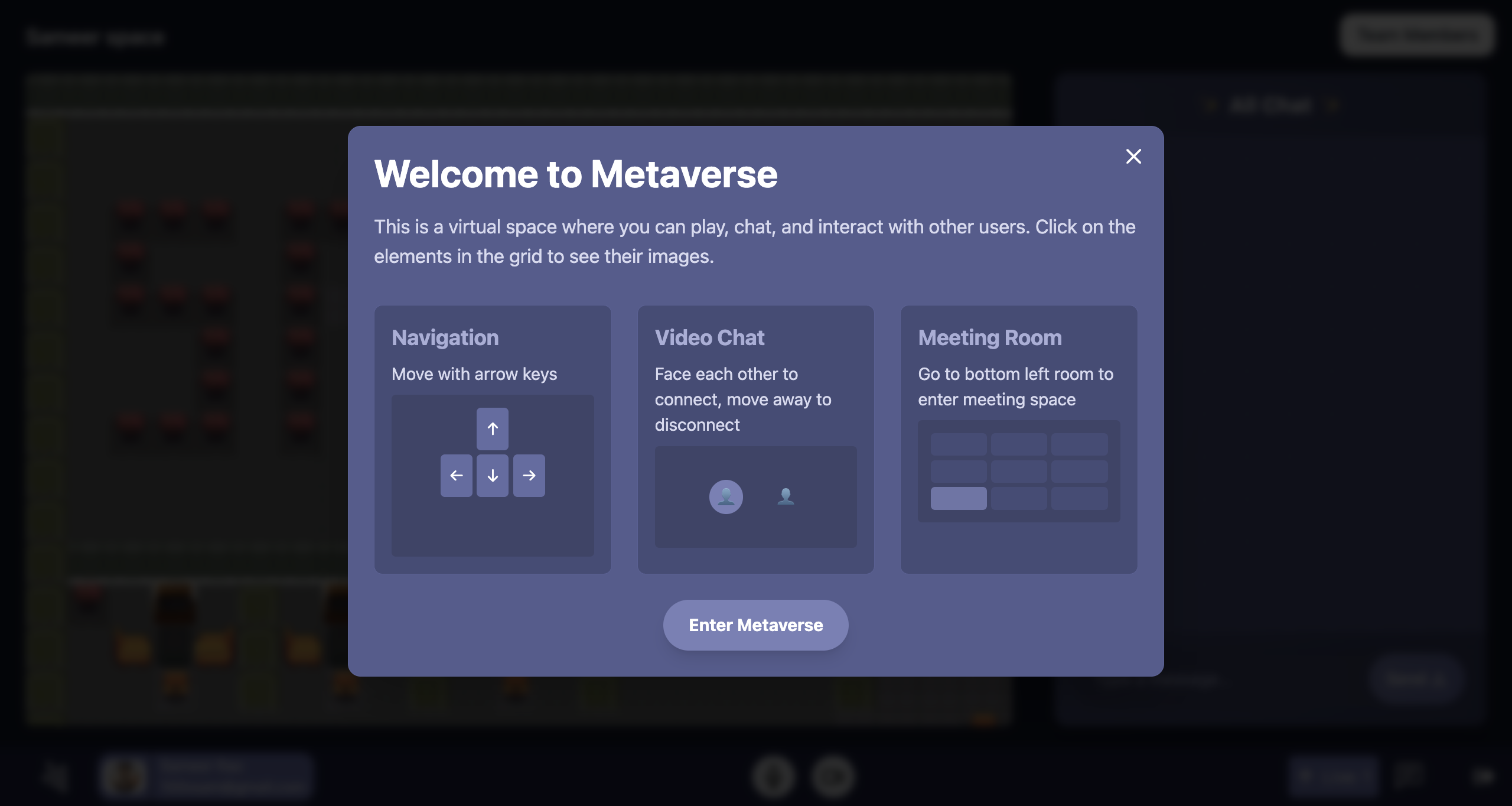
🖼️ Visuals
🧩 Project Architecture
🖥 Frontend
- Built using Next.js and React for fast rendering and SPA-like behavior
- Integrated with Framer Motion for smooth avatar and environment animations
- Responsive layout with TailwindCSS
🔌 Backend
- Real-time interactions powered by WebSocket
- User and session management handled with PostgreSQL + Prisma
- Video/audio communication via WebRTC integration (peer-to-peer)
🧠 Challenges Tackled
- 🧮 Optimizing performance for complex interactive maps with many avatars
- 🔄 Synchronizing movement and real-time interaction for all users
- 📞 Implementing WebRTC in a modular avatar-driven environment
- 🧰 Maintaining responsiveness for both desktop and mobile layouts
- 🌐 Cross-browser compatibility across Chrome, Safari, and Firefox
⏳ Project Duration
📅 Feb 2024 – Apr 2024
👨💻 Role: Full Stack Developer
💡 Learning Outcomes
- Building real-time collaborative environments with WebSocket
- Managing distributed UI states across users in shared virtual spaces
- Implementing dynamic video/audio calling logic into React
- Designing flexible backend schemas with Prisma + PostgreSQL
📂 Folder Structure (Simplified)
2d-metaverse/
├── components/       # Reusable UI components (Avatar, Map, Controls)
├── pages/            # Next.js routes and views
├── public/           # Static assets and map images
├── lib/              # WebSocket and video call logic
├── prisma/           # DB schema and queries
├── styles/           # Tailwind and global styles
└── utils/            # Helpers for avatar logic, media, and map data